How autistic children actually learn differently than their peers
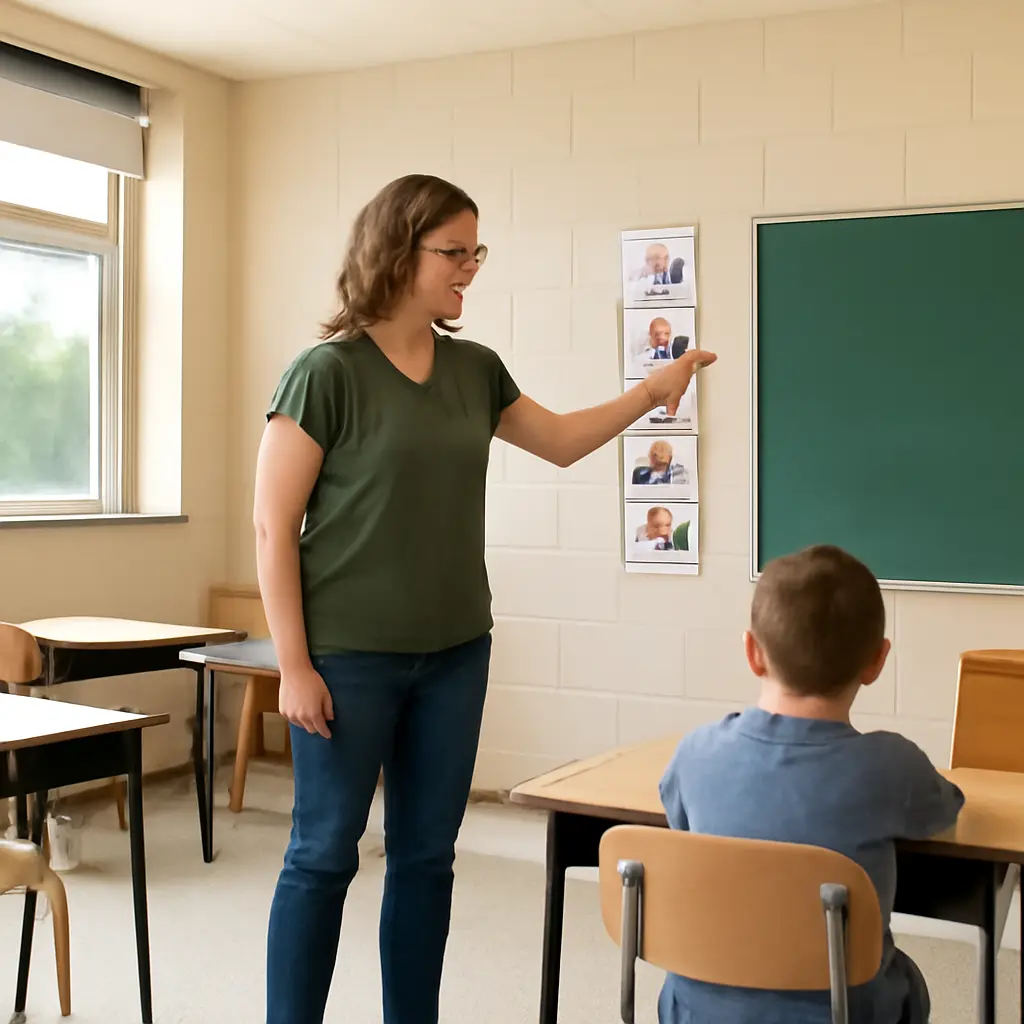
Autistic children learn in ways shaped by their individual strengths, sensory experiences, communication styles, and support needs—not by a single “autistic learning style.” The National Autistic Society describes autism as a lifelong developmental difference that can affect communication, social interaction, and how a person experiences the world. Research finds that some autistic children show relative strengths in areas such as visual search or noticing details, while other skills—including language, attention, or transferring a learned skill to a new situation—may require different supports. Because autism is highly variable, useful teaching begins with the child rather than a stereotype. This article explains what learning differences can look like, how sensory and communication factors shape learning, which teaching practices are supported by evidence, and how families and schools can work together.
Learning differences and autistic children: what the evidence means
“Learning differently” is a practical description, not a formal diagnosis or a claim that every autistic child learns through one special method. Autism spectrum disorder is a neurodevelopmental condition, and the word “spectrum” reflects substantial variation in abilities and support needs. The U.S. Centers for Disease Control and Prevention (CDC) estimated that about 1 in 36 8-year-old children in 11 U.S. communities was identified with autism in its 2020 surveillance data, published in 2023. That figure describes identification in those communities, not a global prevalence rate or an individual child’s learning profile.
Learning includes acquiring information, remembering it, communicating understanding, applying it, and participating in a setting. An autistic student may excel at one part of this process and need support with another. For example, a child may understand a science concept but find a spoken, fast-moving group discussion difficult; another may communicate fluently but struggle when a familiar task changes unexpectedly. Comparing a child only with classmates can conceal these uneven profiles.
Learning profiles define how autistic children learn differently
A learning profile is a description of an individual’s relative strengths, challenges, interests, and support needs across tasks and settings. It is not a fixed label. The American Psychiatric Association’s diagnostic framework recognizes that autism can involve differences in social communication and interaction, along with restricted or repetitive behaviors or interests; it also recognizes that characteristics and support needs vary. In education, a useful profile therefore considers cognition, language, sensory processing, motor skills, executive functioning, and the learning environment together.
Some research reports average group differences, but group findings cannot predict what an individual child can do. A 2021 review by the National Institute for Health and Care Excellence (NICE) emphasizes individualized assessment and support rather than assuming a single intervention or profile suits everyone. The practical question is not “How do autistic children learn?” but “What helps this child understand, participate, and show what they know?”
Strengths, interests, and uneven skill development
An uneven profile means that abilities can differ considerably across domains. A child might have strong factual recall, sustained interest in a topic, careful attention to visual detail, or advanced knowledge in a preferred area while needing more help with flexible problem-solving, writing, or everyday routines. These strengths are genuine learning resources, but they should not be assumed from diagnosis alone.
For instance, a student fascinated by transit maps might use routes and timetables to practise sequencing, comparison, geography, and reading. The aim is to connect an interest to broader learning goals without reducing every lesson to that interest. Educators can observe which materials and activities sustain engagement, then check whether the child can use the skill in other contexts.
Language, communication, and showing knowledge
Communication differences can affect how a child receives instruction and demonstrates understanding. Some autistic children use spoken language fluently; others use short phrases, augmentative and alternative communication (AAC), sign, typing, pictures, or a combination. Speech production, language comprehension, conversational timing, and nonverbal communication are distinct abilities, so an adult should not infer understanding—or lack of it—solely from eye contact, speech, or response speed.
A child who does not answer a question immediately may need extra processing time, a less demanding way to respond, or a clearer prompt. Teachers can offer choices such as pointing, writing, selecting an AAC symbol, or explaining aloud. The American Speech-Language-Hearing Association describes AAC as a range of communication methods and tools; using AAC does not require a child to stop developing speech. Reliable access to the child’s communication system is essential for learning and participation.
Attention, memory, and executive-function demands
Executive functions are mental processes involved in planning, shifting attention, organizing steps, and monitoring progress. These demands can make a task difficult even when the child understands its academic content. A multi-step instruction delivered once, for example, requires the learner to hear, remember, sequence, and carry out several actions. Breaking it into visible steps reduces the load without lowering the learning goal.
Supports may include a checklist, a worked example, a visual schedule, predictable routines, and advance notice of changes. These are not universal prescriptions: some students prefer concise written directions, while others benefit from pictures or demonstrations. Staff should test supports with the child and observe whether they improve independence, accuracy, and comfort.
Sensory and environmental factors shape autistic children’s learning
Sensory processing refers to how a person notices and responds to information such as sound, light, touch, movement, taste, and smell. The CDC lists unusual reactions to sensory aspects of the environment among characteristics that may be associated with autism, while emphasizing that characteristics differ between people. A buzzing light, crowded hallway, or scratchy uniform may consume attention that would otherwise be available for a lesson; another child may seek movement or sound to stay alert.
Sensory needs are contextual, not simply “oversensitivity.” The same student may tolerate a sound at home but find it overwhelming in a noisy classroom, especially when tired or uncertain. The National Autistic Society recommends understanding triggers and making reasonable adjustments, while avoiding assumptions about what a particular sensory behavior means.
Reducing barriers without isolating the learner
Environmental adjustments can include access to a quieter workspace, ear defenders when appropriate, reduced visual clutter, movement breaks, predictable transitions, or permission to leave a crowded setting briefly. These supports should be planned with the child and family, and reviewed for their effect on learning and inclusion. A quiet option is most useful when it is available without being treated as punishment or a substitute for classroom participation.
A simple classroom example illustrates the connection: if a student’s work drops during assemblies, the problem may not be motivation or ability. Noise, crowding, and unpredictable timing may be barriers. Offering a quieter location or a clear schedule can help the student access the same educational experience.
Teaching practices support autistic children’s learning
Evidence-informed teaching combines clear instruction, individualized goals, accessible communication, and opportunities to practise meaningful skills. The What Works Clearinghouse, operated by the U.S. Institute of Education Sciences, reviews research on educational interventions; its reports and evidence standards can help educators distinguish evaluated approaches from claims based only on anecdote. No strategy should be selected merely because a child is autistic: teams should identify the learning goal, assess the child’s needs, and track outcomes.
Explicit instruction, visual supports, and predictable routines
Explicit instruction makes expectations visible: explain the task, model the steps, provide guided practice, and check understanding. Visual supports—such as written directions, diagrams, schedules, and finished examples—can supplement spoken information and make transitions easier to anticipate. They should be age-respectful and tailored to the learner; a visual schedule is helpful only if the child can understand and use it.
Predictability does not mean that every activity must remain unchanged. It means preparing the child for changes where possible, explaining what will happen, and offering a way to ask for clarification or a break. Teachers can gradually practise flexibility in supportive conditions rather than introducing surprise changes as a test.
Practice, generalization, and meaningful feedback
Generalization is using a learned skill with different people, materials, or settings. A student may solve a maths problem with a familiar worksheet but need help recognizing the same operation in a word problem. Educators can teach the underlying concept explicitly, practise with varied examples, and coordinate opportunities across settings. The goal is not rote repetition alone, but flexible, useful understanding.
Feedback works best when it is specific and informative—for example, “You checked each step against the list”—rather than vague or focused only on compliance. Learning plans should measure outcomes that matter, such as comprehension, communication, independence, and participation, while also considering stress and well-being.
Individualized supports and progress monitoring
An individualized education program (IEP) in the United States documents eligible students’ educational goals and services under the Individuals with Disabilities Education Act. Other countries use different plans and legal frameworks. Whatever the system, useful planning includes the child’s voice, family knowledge, assessment information, practical accommodations, and regular review of progress.
A short progress chart can help a team compare a target skill across settings—for example, following a three-step classroom routine with and without a visual checklist. Such a chart should record context as well as performance, since noise, fatigue, unfamiliar staff, or a change in routine may affect results. Data should guide adjustments, not reduce the child to a score.
Families and schools can build learning partnerships
Parents and caregivers often know which communication methods, interests, routines, and sensory conditions help a child feel secure. Teachers and specialists can contribute observations from academic and social settings. Sharing practical information across home and school can prevent conflicting expectations and help skills transfer, while respecting the child’s privacy and preferences.
A useful team discussion focuses on observable questions: What helps the child begin a task? How do they indicate confusion or discomfort? Which response formats let them show understanding? What changes when the setting becomes noisy or unpredictable? Answers support collaboration more effectively than assumptions about what the child “should” be able to do.
Conclusion: responsive teaching makes learning accessible
Autistic children do not share one learning style. Their learning profiles may include distinctive strengths and support needs; communication and executive-function demands can affect how they access instruction and show knowledge; and sensory environments can either support or obstruct participation. Clear teaching, visual and communication supports, thoughtful adjustments, and individualized progress monitoring can help remove barriers while preserving meaningful expectations.
Families, educators, and specialists should begin by listening to the child, identifying specific goals, and reviewing whether supports improve learning and well-being. For further guidance, consult a qualified education or communication professional and the official autism, special-education, and evidence-review resources listed below.
Sources: Centers for Disease Control and Prevention, “Prevalence and Characteristics of Autism Spectrum Disorder Among Children Aged 8 Years—Autism and Developmental Disabilities Monitoring Network, 11 Sites, United States, 2020,” https://www.cdc.gov/mmwr/volumes/72/ss/ss7202a1.htm; American Psychiatric Association, Diagnostic and Statistical Manual of Mental Disorders, Fifth Edition, Text Revision (DSM-5-TR), https://www.psychiatry.org/psychiatrists/practice/dsm; National Autistic Society, “What is autism?” https://www.autism.org.uk/advice-and-guidance/what-is-autism; National Institute for Health and Care Excellence, Autism spectrum disorder in under 19s: support and management, https://www.nice.org.uk/guidance/cg170; American Speech-Language-Hearing Association, Augmentative and Alternative Communication (AAC), https://www.asha.org/public/speech/disorders/aac/; U.S. Institute of Education Sciences, What Works Clearinghouse, https://ies.ed.gov/ncee/wwc/; U.S. Department of Education, Individuals with Disabilities Education Act, https://sites.ed.gov/idea/
Related Post

Kids can’t write because they can’t organize language in their heads
Children’s writing depends on more than knowing how to spell or form sentences: writers must [...]
The relentless need to understand everything around you explained
The relentless need to understand everything around you—often called epistemic curiosity or, when it becomes [...]