Twice Exceptional Children and Why Standard Classrooms Fail Them
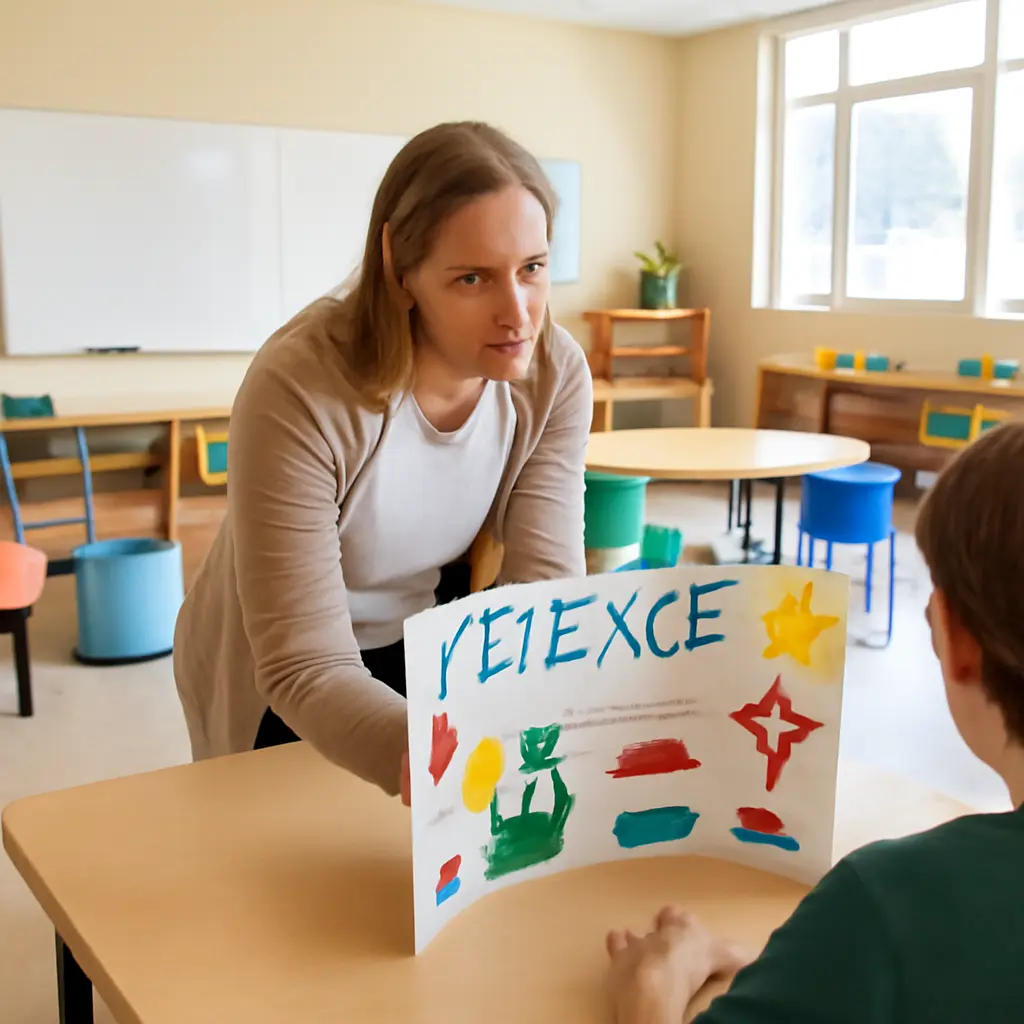
Twice-exceptional (2e) children are students who are both gifted and have one or more disabilities, such as dyslexia, autism, ADHD, or a language or sensory impairment. Their strengths can mask their support needs, while their disabilities can obscure their abilities. As a result, standard classrooms built around uniform pacing, conventional demonstrations of learning, and separate gifted and special-education services often fail to recognize or develop the whole student. Research and education guidance point to a better approach: identify strengths and needs together, provide appropriate accommodations and advanced learning, and coordinate support rather than making students qualify for one side of their profile at a time.
Twice-Exceptional Children: Definition, Identification, and Classroom Challenges
What “twice-exceptional” means
The National Association for Gifted Children (NAGC) uses “twice-exceptional” to describe students who demonstrate high ability or potential in one or more areas and also have a disability that requires specialized support. The label is commonly shortened to “2e.” It describes a varied group, not a single diagnosis: a student may be gifted and dyslexic, gifted and autistic, gifted and have ADHD, or gifted while experiencing another disability.
There is no single national count of 2e students. Schools and researchers use different definitions, screening methods, and identification systems, so prevalence estimates are not directly comparable. The U.S. Department of Education’s National Center for Education Statistics reported that 7.5 million students ages 3–21 received services under the Individuals with Disabilities Education Act (IDEA) in 2022–23—about 15% of public-school enrollment. That figure covers students served under IDEA generally, not 2e students specifically, but it illustrates the scale of disability-related educational needs within which twice-exceptionality may go unidentified.
The central paradox: strengths and needs can hide each other
A 2e student may reason at an advanced level but struggle to decode text, organize work, regulate attention, or write by hand. Strong vocabulary or problem-solving can conceal a disability; conversely, slow work, inconsistent grades, or disruptive behavior can conceal giftedness. The National Association for Gifted Children describes this as a masking problem: abilities and disabilities can compensate for or obscure one another, making identification difficult.
This profile can also look uneven across subjects and situations. A child may produce sophisticated ideas in conversation but submit short written assignments, or excel in a preferred topic while needing substantial help with transitions and task completion. Uneven performance is not proof of twice-exceptionality, but it is a reason to investigate the student’s learning profile rather than assume low motivation or lack of effort.
Why Standard Classrooms Miss Twice-Exceptional Students
One-size-fits-all pacing and instruction
A standard classroom often organizes learning around grade-level pacing, common assignments, and a limited set of ways to show understanding. Those routines can leave a gifted student under-challenged while simultaneously making the student’s disability a barrier to accessing the lesson. Repeating mastered material may intensify boredom, while lengthy written work or rapid transitions may prevent the student from demonstrating knowledge.
The National Center for Education Statistics reported that 49 states and the District of Columbia had policies or regulations addressing gifted and talented education in its 2018–19 state-policy survey, but policies differed in requirements and implementation. The existence of a policy does not guarantee that every student receives suitable services; access can depend on district resources, local identification practices, and whether gifted and disability supports are coordinated.
Separate systems create gaps in support
Gifted education and special education are often organized as separate pathways. A school may focus on a student’s disability and overlook advanced learning needs, or emphasize gifted potential while treating disability-related barriers as a reason to delay enrichment. Students can therefore fall between systems: neither the advanced instruction that sustains engagement nor the accommodations that enable access are consistently provided.
Under IDEA, eligible students are entitled to an individualized education program (IEP) designed to support their educational needs. Section 504 of the Rehabilitation Act can provide accommodations for students with qualifying disabilities who do not need special education under IDEA. Giftedness alone does not establish eligibility for either plan, and state and local gifted-program rules vary. The practical challenge is ensuring that a student’s strengths inform instruction while disability-related needs are addressed through the appropriate services.
Conventional measures can mistake difficulty for low ability
Timed tests, handwritten responses, reading-heavy assessments, and behavior-based judgments may measure a student’s disability-related barriers as much as the intended knowledge. A student with dyslexia may understand a science concept but read the test slowly; a student with ADHD may know the material yet miss directions or leave work unfinished. If educators rely on a single score or one classroom behavior, they risk forming an incomplete picture.
The U.S. Department of Education’s Office for Civil Rights has emphasized that disability evaluation and educational decisions should draw on appropriate information and not rely on a single measure. For 2e students, that principle supports looking across cognitive and achievement data, classroom work, observations, student interviews, and family input. Assessment should distinguish what a student knows from the conditions that make it difficult to show that knowledge.
Recognizing Twice-Exceptional Profiles
Look for patterns, not a single “2e” checklist
There is no universal behavioral checklist that diagnoses twice-exceptionality. Instead, educators and families can notice persistent discrepancies: unusually advanced insight alongside unexpectedly weak output, intense curiosity alongside difficulty completing routine tasks, or strong verbal reasoning alongside substantial reading or writing challenges. These observations should prompt careful assessment, not serve as a diagnosis on their own.
A robust evaluation considers both ability and disability. Depending on the concern, it may include cognitive and academic assessment, speech-language or occupational-therapy input, attention or executive-function information, work samples, and observations across settings. The goal is to understand the student’s learning profile and educational needs—not to collect labels for their own sake.
Common profiles and their distinct support needs
Twice-exceptionality includes multiple combinations, and each student’s needs differ. Common examples include:
- Giftedness with dyslexia, where advanced reasoning may coexist with difficulty reading accurately or fluently.
- Giftedness with ADHD, where creativity or rapid idea generation may coexist with challenges in attention, planning, time management, or task completion.
- Giftedness with autism, where deep knowledge or strong pattern recognition may coexist with communication, sensory, flexibility, or social-interaction needs.
- Giftedness with dysgraphia or other written-output difficulties, where complex ideas may be hard to express through handwriting, spelling, or extended written work.
These examples are not interchangeable, and none can be inferred solely from a child’s grades or personality. Qualified professionals should assess suspected disabilities, while schools should use multiple sources of evidence to identify advanced strengths and plan instruction.
What Schools Can Do: Support Strengths and Disability Needs Together
Pair access accommodations with meaningful challenge
Accommodations reduce disability-related barriers; they do not require lowering the intellectual level of the learning. Depending on a student’s documented needs, supports may include audiobooks or text-to-speech, speech-to-text, extended time, reduced copying, explicit instructions, chunked assignments, visual schedules, movement breaks, or assistive technology. At the same time, curriculum compacting, advanced reading, independent projects, subject acceleration, or access to higher-level problem solving can preserve appropriate challenge.
The central design principle is to separate the learning goal from an unnecessary obstacle. If the goal is to assess scientific reasoning, for example, an audio presentation may be a suitable alternative to a lengthy handwritten response when writing mechanics are not the target skill. Conversely, when written expression itself is the learning objective, the student may need direct instruction as well as accommodations.
Use coordinated, individualized planning
Effective planning brings together the student, family, general-education teacher, gifted-education specialist, special-education staff, and relevant support professionals. An IEP or Section 504 plan can address eligible disability-related needs; gifted-service planning can address advanced learning opportunities. These supports should be coordinated so that one plan does not unintentionally cancel the other.
A practical plan identifies the student’s strengths, barriers, accommodations, level of challenge, responsible staff, and ways to monitor progress. Regular review matters because needs may change by subject, developmental stage, or classroom environment. Including the student’s perspective can reveal which supports are useful and help build self-advocacy.
Build classrooms that allow more than one route to learning
Universal Design for Learning, developed by CAST, encourages teachers to offer multiple means of engagement, representation, and action or expression. In practice, this may mean presenting information through text, diagrams, and audio; allowing students to demonstrate learning in more than one format; and designing routines that make directions and task steps clear. Universal design can improve access for many students, but it does not replace individualized evaluation or legally required supports.
Teachers can also reduce the cost of routine barriers by making schedules visible, providing models of finished work, breaking long tasks into checkpoints, and offering choice within clear learning goals. These practices are especially helpful when a student’s executive-function, sensory, reading, or written-output needs interfere with showing advanced understanding.
A Classroom Example: Separate the Skill From the Barrier
Consider a student who explains complex astronomy ideas aloud but turns in short, error-filled written assignments. A standard response might be to assign more writing practice or conclude that the student has not learned the material. A more informative response is to examine both the student’s knowledge and the writing process: review work samples, consult the family, assess reading and written-language skills where appropriate, and check whether planning or attention is also affecting output.
If evidence indicates a disability, the school can provide appropriate evaluation and support while continuing to offer challenging science content. The student might use speech-to-text for some demonstrations of subject knowledge, receive explicit writing instruction, and pursue an advanced astronomy project. This is an illustrative example, not a diagnosis or a substitute for an individualized evaluation.
Conclusion: Make the Whole Student Visible
Twice-exceptional children combine advanced abilities with disability-related needs, and the interaction between those characteristics can make both harder to recognize. Standard classrooms may fail them through uniform pacing, narrow measures of achievement, and disconnected gifted and disability services. Better practice identifies strengths and needs together, removes access barriers without removing challenge, and coordinates individualized support.
Families who see a persistent gap between a child’s ideas and school performance can request a conversation with teachers and ask about appropriate evaluation and support pathways. Educators can review identification practices, coordinate gifted and special-education expertise, and invite students to describe what helps them learn. Further reading from NAGC, the U.S. Department of Education, and CAST can help families and schools turn recognition into action.
Sources: National Association for Gifted Children, “Twice-Exceptional Students,” https://nagc.org/page/twice-exceptional-students; National Center for Education Statistics, “Students With Disabilities,” Digest of Education Statistics, https://nces.ed.gov/programs/coe/indicator/cgg; National Center for Education Statistics, “State of the States in Gifted Education,” https://nces.ed.gov/programs/statereform/tab5_1.asp; U.S. Department of Education, Individuals with Disabilities Education Act, https://sites.ed.gov/idea/; U.S. Department of Education, Office for Civil Rights, “Dear Colleague Letter: Resource Comparability,” https://www2.ed.gov/about/offices/list/ocr/letters/colleague-resourcecomp-201410.pdf; CAST, Universal Design for Learning Guidelines, https://udlguidelines.cast.org/.
Related Post

Essential conversations to have with your child’s learning specialist
A learning specialist is an educator who helps students strengthen the skills and strategies they [...]
Five warning signs your child needs extra academic support right now
A child who is struggling academically may need more support—not more pressure. Five signs to [...]